If your skin has been more reactive since the evenings got dark, that may not be a new product failing you. Stress can show up there. The American Academy of Dermatology says it can worsen acne and other skin conditions.
It’s dark by about 5:30 now in North Bethesda, and the light keeps leaving a little earlier until December 21. Shorter days can throw off sleep, and sleep and stress feed each other. None of this is a sign that something is “wrong” with you. It does mean a few small habits are worth trying.
You don’t have to do all of them.
Why this happens
When you’re stressed, the American Academy of Dermatology explains, your body can release hormones that increase the oil your skin makes. That extra oil can clog pores and bring on an acne flare. Stress can also make eczema itchier, and some people with psoriasis notice flares when life gets heavy.
This is not a diagnosis, and stress is rarely the only factor. Genetics and the products you use play a part too. If your face has been acting up as the days have gotten short, it’s reasonable to look at stress and sleep, instead of assuming you need a new cream.
Light matters here too. The NIH says light is the strongest signal in the environment for resetting your sleep-wake cycle. On a November morning in Rockville or Bethesda, that light is in short supply if you go from a dark bedroom to a dim kitchen to a car and never really step outside.
In the morning
Before you pick up your phone, name one or two things you already have. Harvard Health says gratitude is strongly and consistently associated with greater happiness.
Then get outside, even if it’s gray. The CDC says bright light in the first hours of the day is especially helpful, and that time spent outside on a cloudy day still beats staying in dim indoor light. A short walk around the block on Hubbard Drive is enough. Never look directly at the sun.
If you can spare closer to 30 minutes outdoors, the CDC says that helps too. If you can’t, go anyway. Five minutes is better than none.
Later in the day
Move a little.
Mayo Clinic says exercise in almost any form can act as a stress reliever. The American Psychological Association says brisk movement can also combat stress directly. You don’t need a gym plan. A walk at lunch, or a lap around the Pike District after work, counts.
When you can, take a few long, slow, deep breaths. Harvard Health describes this as a simple way to call up the body’s relaxation response, and says even a few minutes of practice can help. Sit down. Breathe. Then go back to what you were doing.
Let go of what you can’t fix today. The APA suggests striving for acceptance of situations outside your control, and avoiding dwelling on what you can’t change. Put it down. Come back to what you can actually do this afternoon.
Drink some water. Harvard’s Nutrition Source says even mild dehydration can bring fatigue and mood changes. Water also helps maintain healthy skin. Keep a glass on your desk. That’s it.
In the evening
Protect your sleep. The APA says daytime stress can disturb sleep, and lost sleep can affect mood. The CDC says enough sleep can reduce stress and improve mood, and that most adults need at least 7 hours.
A few practical habits from the CDC: go to bed and get up at about the same time, keep the room cool and dark, put screens away at least 30 minutes before bed, and skip caffeine in the afternoon or evening. None of that is fancy. It just works better if you actually do it most nights.
And make a cup of tea, then sit down with it. Harvard Health calls tea a soothing comfort, and says some studies suggest it might help with stress, though the evidence is not conclusive. Skip the heavy sweetener if you can. The pause is the point.
If you want an hour at the spa
If you’d like a quiet hour where nobody needs anything from you, our team is here at 5950 Hubbard Drive in North Bethesda, a short trip from Rockville and Bethesda.
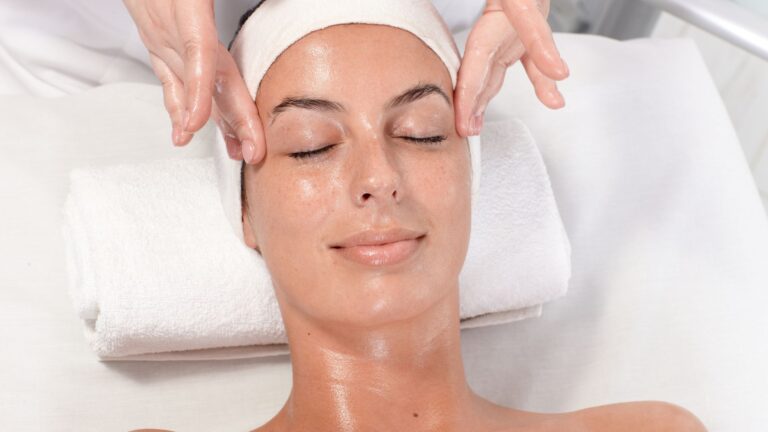
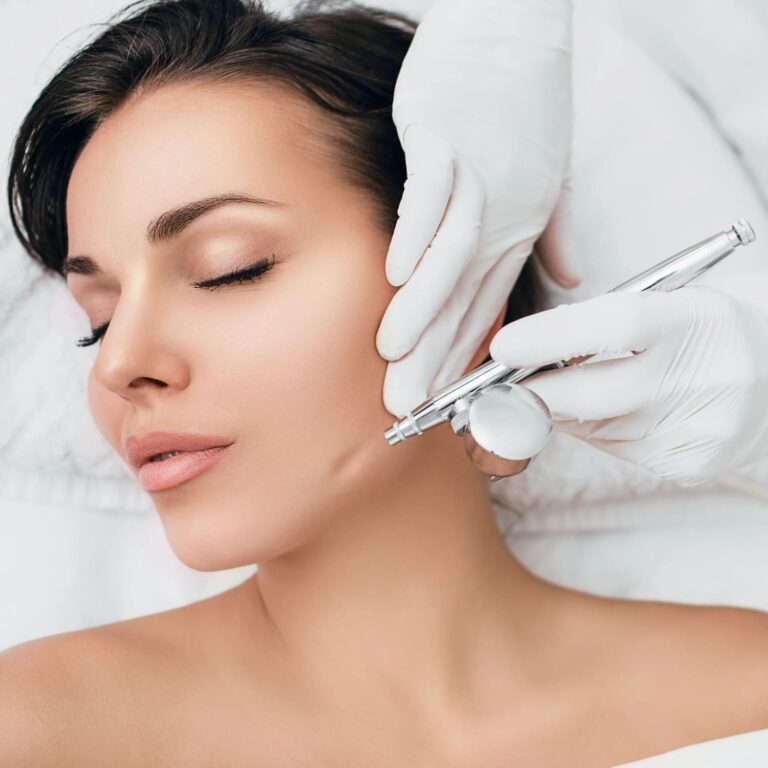
Our Oasis Customized Facial starts with a consultation, and our estheticians choose what your skin needs that day, whether that’s dull tone, dark spots, fine lines, or breakouts. This is not medical care, and it is not a treatment for stress. It is time for you.
The APA lists massage among simple ways people ease the muscle tension that stress can bring. Our Relaxing Swedish Massage comes in 60 or 80 minutes.
A few questions
Can stress really affect my skin?
Yes. The American Academy of Dermatology says stress can worsen acne by increasing the oil your skin makes, and it can make other skin conditions feel worse too. That doesn’t mean stress is the only cause. If your skin is a real concern, a dermatologist is the right person to see. A facial is not a substitute for that.
Will a facial or a massage fix my stress?
No. We don’t claim that. Some people feel calmer after an hour with our team. The APA mentions massage as one way to ease muscle tension from stress. If stress or low mood lasts for weeks, or makes daily life hard, please talk with your doctor or a mental health provider.
Do I have to do all of these habits?
No. Pick one or two and repeat them. A grateful minute and a short walk most mornings will do more than a long list you drop by Wednesday.
Where are you, and how do I book?
Little Oasis Spa is at 5950 Hubbard Drive, North Bethesda. You can schedule your facial treatment here.
This is general wellness education, not medical advice.
We look forward to seeing you soon.
Schedule Your Facial Treatment Here
The Little Oasis Spa team
Sources
- American Academy of Dermatology, “6 skin and hair conditions linked to stress.” https://www.aad.org/public/diseases/a-z/stress-skin-conditions
- Harvard Health, “Giving thanks can make you happier.” https://www.harvardhealth.org/healthbeat/giving-thanks-can-make-you-happier
- NIH National Heart, Lung, and Blood Institute, “Circadian Rhythm Disorders: Treatment.” https://www.nhlbi.nih.gov/health/circadian-rhythm-disorders/treatment
- CDC/NIOSH, “Improve Sleep: Tips to Improve Your Sleep When Times Are Tough.” https://www.cdc.gov/niosh/bulletin/2020/sleep.html
- Mayo Clinic, “Exercise and stress: Get moving to manage stress.” https://www.mayoclinic.org/healthy-lifestyle/stress-management/in-depth/exercise-and-stress/art-20044469
- American Psychological Association, “Healthy ways to handle life’s stressors.” https://www.apa.org/topics/stress/tips
- American Psychological Association, “10 tips for dealing with the stress of uncertainty.” https://www.apa.org/topics/stress/uncertainty
- Harvard Health, “Six relaxation techniques to reduce stress.” https://www.harvardhealth.org/mind-and-mood/six-relaxation-techniques-to-reduce-stress
- Harvard T.H. Chan School of Public Health, The Nutrition Source, “How Much Water Do You Need?” https://nutritionsource.hsph.harvard.edu/water/
- CDC, “About Sleep.” https://www.cdc.gov/sleep/about/index.html
- Harvard Health, “Does drinking tea really help health?” (Feb 1, 2025). https://www.harvardhealth.org/healthy-aging-and-longevity/does-drinking-tea-really-help-health