Little Oasis Spa, 5950 Hubbard Drive, North Bethesda. November 17, 2026.
If your face started feeling tight the same week the heat came on, you’re in good company. It was 28°F at the Montgomery County Airport in Gaithersburg early this morning, and the forecast for North Bethesda has lows in the mid-30s the next couple of nights. Furnaces are running. Indoor air gets drier. And for a lot of us, skin seems to get a little less forgiving about it every year.
Last week there was a new piece of research on exactly that question, so we wanted to write it up in plain language, along with what you can actually do about dry skin right now.
What the UVA study found
On November 11, UVA Health shared work from the lab of Dr. Lu Q. Le, who chairs the Department of Dermatology at the University of Virginia School of Medicine. The study was published in the Journal of Clinical Investigation and was on the cover of its November 2 issue.
It’s about sebaceous glands. Those are the small glands attached to hair follicles that make sebum, the oil that helps protect skin and keep it moisturized. UVA’s summary puts it simply: too little sebum is linked to dry skin and atopic dermatitis, and too much can contribute to acne.
The cells that make sebum break apart to release it, so the gland has to keep replacing them your whole life. Dr. Le’s team found the stem cells that do that job (they’re marked by a protein called KROX20) and a signaling pathway, called Notch, that keeps the gland working. In their lab models, when those stem cells were lost, the glands shrank, skin lost more water, and it ended up dry in a way that looked like aging skin. When the researchers applied a small-molecule drug to the skin that switched the Notch pathway back on, the glands recovered and water loss went down.
Dr. Le called it a “potential strategy for restoring sebum production and treating dry skin, particularly in aging skin,” and described age-related dry skin as “one of the most common dermatologic conditions in the United States.”
What it doesn’t mean (yet)
This is early lab research. It isn’t a product, and it hasn’t been tested as a treatment in people. Nobody can sell you a cream based on it, and if you see one claiming to be, be skeptical.
What it does do is explain something a lot of women over 40 already notice. Skin that used to handle a Maryland winter fine starts to feel tight by Thanksgiving. Part of that is the air. Part of it, as this research points to, is that skin’s own oil supply matters, and keeping that barrier happy is worth some attention.
What actually helps right now
The American Academy of Dermatology has a plain, practical list for dry skin. The ones we’d start with this week:
- Shorter, warm showers. The AAD says to keep baths and showers to 5 to 10 minutes in warm water, not hot. Closing the bathroom door helps keep the steam in.
- Go easy on cleanser. Use a gentle one, and only enough to get the dirt and oil off. If you’re seeing a thick lather, it’s more than you need.
- Put your skincare on right after you shower. Pat dry with a towel instead of rubbing, then apply your products right away, before your skin has a chance to dry out. The AAD suggests a fragrance-free cream or ointment and says to reapply whenever skin feels dry, including after washing your hands.
- Run a humidifier at night. A portable one in the bedroom while you sleep, and clean it regularly so it doesn’t grow mold.
- Keep wearing sunscreen. Broad-spectrum, SPF 30 or higher, even in winter.
- Gloves. For dishes, and for the cold. Hands are usually the first place dry skin shows up.
You don’t have to do all of it. If you only change one thing, make it putting your skincare on right after you shower. It’s the easiest habit to keep.
Where a facial fits
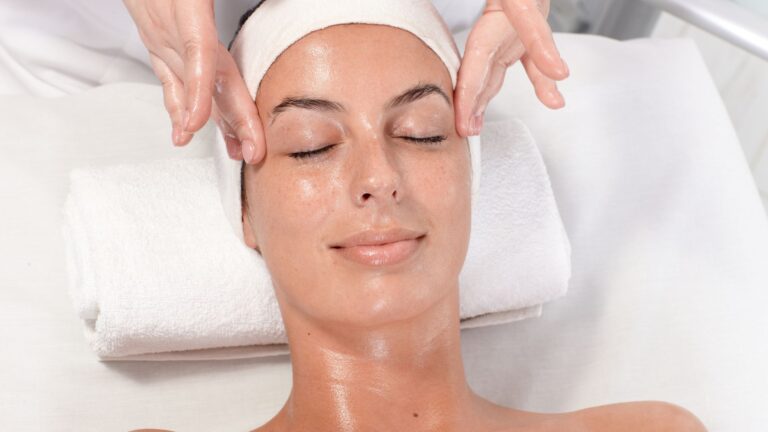
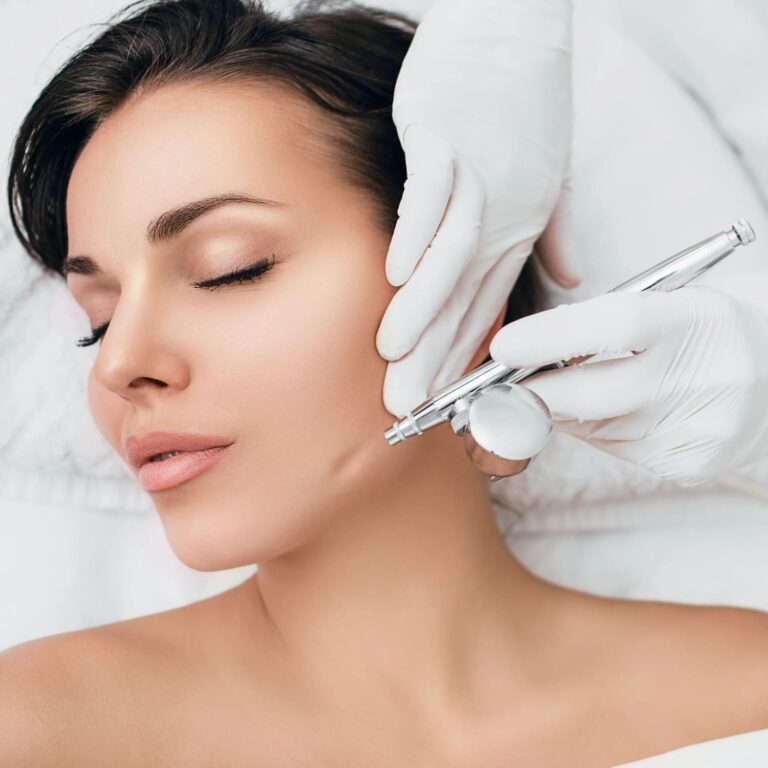
A facial won’t change your sebaceous glands, and we’re not going to tell you it will. What it can do is give your skin a real cleanse without stripping it, some steam, and products chosen for the way your skin is acting this month rather than last summer.
Every Oasis Customized Facial at our North Bethesda studio starts with a consultation. If your skin has gone dry and tight since the heat came on, say so. Our team is trained in the Little Oasis method and will adjust from there. We’re on Hubbard Drive, a few minutes from Rockville and Bethesda, and you can see what’s open on our booking page.
FAQ
Why does my skin get drier in winter? Heated indoor air is dry, and cold, windy air outside doesn’t help. The American Academy of Dermatology recommends a humidifier, and shorter warm showers. We’d add one more: put your skincare on right after you get out.
Does skin really make less oil as we age? Dry skin becomes more common with age, and the new UVA research points to the oil glands as part of why. Their work in lab models showed that when those glands shrink, skin loses more water and dries out.
Is there a new treatment from the UVA study? Not yet. It’s early research in lab models. Any treatment would still need testing in people.
Should I switch to a heavier moisturizer? For overly dry skin, the AAD suggests a cream or ointment, and a fragrance-free one. Put it on right after you get out of the shower.
When should I see a doctor? If your skin is cracking, bleeding, very itchy or not getting better with home care, see a board-certified dermatologist.
This post is general wellness information, not medical advice. Talk with your doctor or a dermatologist about any skin condition.
We look forward to seeing you soon.
The Little Oasis Spa team